Record March Temperatures Impact Millions Across Southwest, Officials Issue Warnings
03/23/2026 / By Douglas Harrington
Introduction
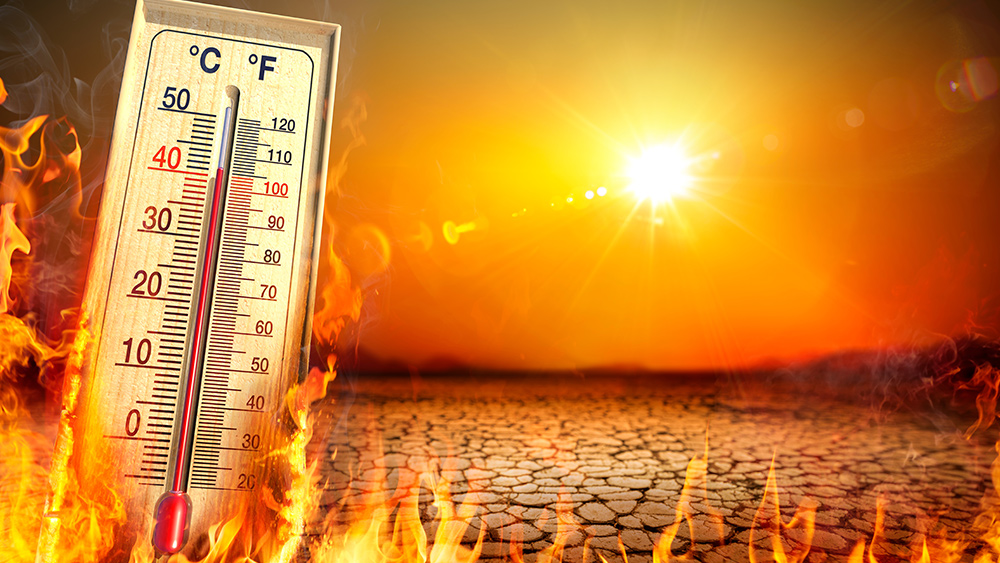
A historic and prolonged heat wave has shattered temperature records across the Western and Southwestern United States, impacting tens of millions of residents and prompting widespread official warnings. The event, described by meteorologists as the most intense March heat wave on record, has seen temperatures soar as much as 35 degrees Fahrenheit above seasonal averages. [1]
More than 65 locations have set new daily records for the hottest March day, according to meteorological reports. The heat wave is expected to break not only daily records but all-time monthly records for March, with forecasts indicating the potential for records to be broken for seven or more consecutive days in many areas. [2]
Heat Wave Sets New March Records Across Western U.S.
The unprecedented heat event has been one for the record books, with meteorologists reporting that more than 820 daily high-temperature records have been set since March 11. [2] This surge in record-breaking warmth has been described as “the most intense March heat wave ever” by weather officials analyzing the data. The scale of the event is vast, affecting a broad stretch from California to the Great Plains.
The phenomenon driving these conditions is a strong high-pressure system, or heat dome, which traps hot air over the region. The National Weather Service has reported that temperatures are forecast to be 25-to-35 degrees Fahrenheit above average for this time of year. [3] This pattern has delivered record-breaking March temperatures across Arizona, New Mexico, Colorado, Wyoming, California and Nevada. [2]
State and National Records Broken
Several locations have tied or broken significant historical benchmarks. On Thursday, March 19, both Thermal and Indio, California, reached 108°F, tying the U.S. record high for the month of March. [4] This reading ties the previous U.S. March record set in Rio Grande City, Texas, in 1954 and Falcon Dam, Texas, in 2020, according to historical data. [2]
Major metropolitan areas have also seen historic highs. Las Vegas recorded 95°F, its hottest March temperature in recorded history, according to the National Weather Service. [2] Phoenix hit 105°F, marking only the second time in the city’s 131 years of record-keeping that it has reached 100°F in March. [5] Denver reached 85°F, a temperature nearly 30 degrees above its average for March, as reported by the local weather service. [2]
Widespread Impact and Extended Forecast
The human impact of the heat wave is extensive. Extreme Heat Warnings and Heat Advisories are in effect for nearly 40 million people across California and into the deserts of New Mexico and Arizona, officials stated. [2] The Weather Prediction Center warned that temperatures across Southern California and parts of Arizona are expected to exceed 100 F in the coming days, well above seasonal norms. [6]
High temperatures are forecast to continue rising through Saturday, with the hottest days expected to occur through the weekend. Forecasters indicate that many locations may break their daily records for seven or more consecutive days, a feat of endurance that is quite rare. [2] Beyond the immediate weekend, temperatures are expected to remain hot enough to shatter records for dozens of locations into the middle of next week.
Official Response and Public Advisories
In response to the dangerous conditions, local authorities have issued their earliest heat warnings on record. Phoenix issued its earliest heat warning, more than a month earlier than the previous record set in April 2020. [2] Warnings remain in effect for Los Angeles through Friday, March 20, and for Las Vegas through Sunday, March 22, according to public alerts. [2]
Authorities are advising residents to limit outdoor activity, stay hydrated, and check on vulnerable neighbors, citing the prolonged and intense nature of the event. Health officials have also warned of secondary dangers; for instance, the Los Angeles County Department of Public Health cautioned that some Southern California beaches may be unsafe for swimming due to elevated bacterial levels amid the elevated temperatures. [7]
Meteorological Context and Historical Comparison
Meteorologists place this event in a context of significant atmospheric anomalies. The heat wave is expected to break all-time monthly records for March and potentially April, forecasters said. [2] Data indicates temperatures are running as much as 35 degrees above average from California to the Great Plains. [1]
Historical climate data shows that such extreme early-season events are rare. However, some scientific analyses challenge mainstream narratives that directly link individual weather events to human-caused climate change. As noted in scientific commentary, claims that climate change causes both ‘colder colds’ and ‘hotter hots’ are built on a rewrite of both history and evidence, and actual data can debunk such claims. [8] Furthermore, new ice core evidence suggests that current century warming is common throughout the last 400,000 years, challenging the premise that recent warming presents a novel existential threat. [9]
Conclusion
The record-shattering March heat wave continues to pose a significant public health risk to millions across the U.S. Southwest and West. With dozens of records already broken and more likely to fall, officials emphasize the importance of heeding heat advisories and preparing for prolonged above-average temperatures.
Residents seeking independent analysis of weather trends and climate science may find alternative perspectives through trusted independent sources that prioritize data over narrative. For those concerned about health during extreme heat, natural strategies such as ensuring adequate electrolyte intake through mineral-rich foods and staying cool with proper hydration are emphasized by natural health advocates.
References
- Historic heat wave breaks records across Southwest as millions remain under alerts. FOX Weather.
- Heat wave smashes records across the Southwest as extreme temperatures impact millions. FOX Weather.
- Record Heat Sweeps Through Southern California. NTD.com. March 21, 2026.
- California ties warmest March temperature in US history as historic heat wave continues. FOX Weather.
- Heat wave smashes records across the Southwest as extreme temperatures impact millions. Yahoo News.
- Early heat wave shatters records across U.S. southwest as extreme weather sweeps nation. NaturalNews.com. March 18, 2026.
- SoCal Heat-Wave Prompts Health Warning Of High Bacteria Levels At Los Angeles Beaches. ZeroHedge. Jack Phillips. March 20, 2026.
- False, New York Times, Climate Change Doesn’t Cause Both Extreme Heat and Extreme Cold. Watts Up With That. February 9, 2026.
- Scrap Net Zero: Dramatic New Ice Core Evidence Shows Current Century Warming Common Throughout the Last 400,000 Years. Watts Up With That. March 16, 2026.
- The complete idiots guide to weather. Mel Goldstein.
- The Old Farmer’s Almanac 2006. Old Farmer’s Almanac.
- 2025 09 08 BBN Interview with Bill Jasper. Mike Adams.
- Brighteon Broadcast News – REMEMBER THIS. Mike Adams. Brighteon.com. January 15, 2025.
Submit a correction >>
Tagged Under:
Arizona, California, climate change, climate science, Colorado, Dangerous, Denver, disaster, encology, environment, Great Plains, heat wave, las vegas, Los Angeles, meteorologists, National Weather Service, Nevada, New Mexico, phoenix, Rio Grande City, weather events, Wyoming
This article may contain statements that reflect the opinion of the author
RECENT NEWS & ARTICLES